The v2 engine splits the work the way a good studio does: the model decides what to say, deterministic code decides how it looks, and a judge signs off before you see anything. This page is the honest tour of that pipeline. Each artifact it produces is its own world: images, carousels, and video.
The pipeline
brief in · masters out
One call walks eleven stages. The model is used where judgment lives; everything that touches pixels is deterministic code. That split is why a post can be revised without being re-rolled.
01BriefmodelThe model reads the business context and distills what this post is for: goal, audience, the one message, and the proof that backs it.
02GatescodeDeterministic gates kill vague briefs before any pixels exist. No concrete message, no supported claim, no post.
03AnglesmodelThree to five candidate points of view. Angles that would work for any competitor fail the swap test and are dropped.
04CopymodelHook options of three to seven words, a platform-native caption, and a call to action in the reader's voice.
05FormatcodeContent picks the format: a number wants a stat card, a testimonial wants a quote card, a real moment wants a photo hook.
06ImagerymodelReal brand photos lead. When the pool is spent, the image model paints a name-free, text-free atmospheric scene instead.
07The dealcodeA dealer deals one of five layout archetypes and a typography voice, deterministically per brand and post. No roulette, no repeats.
08RendercodeA real layout engine composites the text over the scene. Pixels come from code, so warped text and garbled logos are structurally impossible.
09JudgemodelA vision judge checks four hard gates and eleven weighted dimensions, then hands down a verdict with its reasons on the record.
10RevisemodelBelow the bar, only the weakest stage re-runs while everything else holds. Bounded, surgical, and never worse than it started.
11MasterscodeThe settled spec renders true 4:5 and 9:16 masters, separate renders, not crops. Caption, hashtags, score, and the spec ride along.
The spec is the design
same spec · same pixels
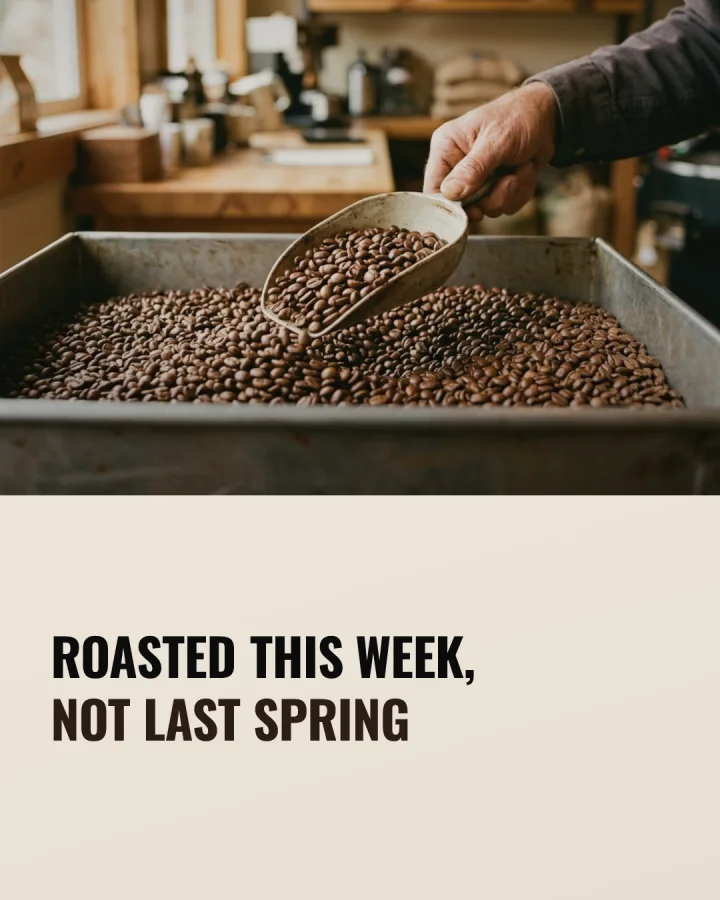
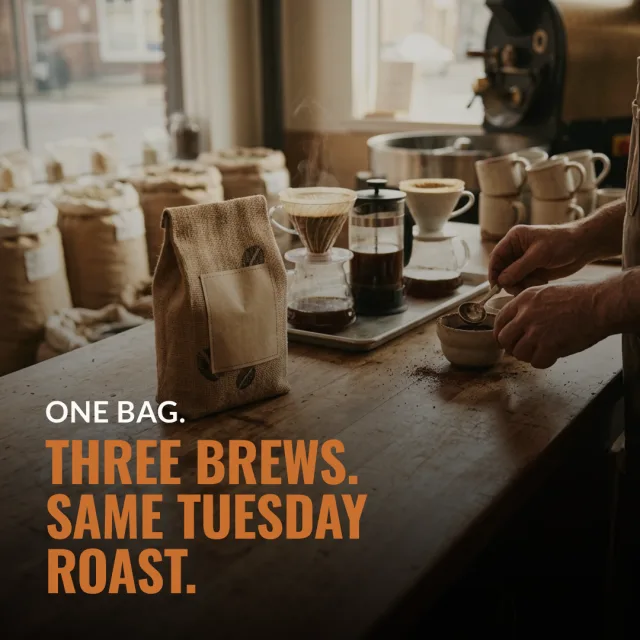
Every visual decision is a serializable spec: the archetype, the frame geometry, the type system, the palette, the words. The renderer never improvises. Same spec, byte-identical PNG, every time. Below: a real spec and the master it rendered, judged SHIP at 95.
Because the spec is the design, an edit is a diff. A revision can fix the headline while the photo, frame, and palette hold verbatim.
The judge
4 gates · 11 dimensions
Every render faces a vision judge before it returns. Four hard gates come first; failing any one is a no-ship regardless of the numeric score.
G1Specificity
The swap test: put a competitor's name and city on the post. If it still works, it fails.
G2Truth
Every claim needs proof, in the post or in the proof bank. Invented stats, staff, or testimonials are a hard no-ship.
G3Visual integrity
The on-image text is read back off the render and checked against the approved copy. Artifacts and garbled glyphs fail.
G4Owner pride
Would the owner recognize their business in two seconds and proudly sign it? If not, it does not ship.
Dimension
Weight
What a 5 looks like
Specificity
3x
Multiple checkable specifics; fails the swap test in the good way.
Voice
3x
Unmistakably this owner, not beige neutral.
Visual craft
3x
One focal point, survives a squint, legible at thumbnail size.
Hook
2x
Three to seven words that create a reason to read.
Brand fit
2x
This business's palette, type, and tone, not a default template.
Focus
1x
One subject, one through-line, one ask.
Proof
1x
Claims backed by a number, source, quote, or visible evidence.
CTA
1x
One specific next step with a concrete payoff.
Language
1x
Plain and confident. No buzzword soup, no AI tells.
Format discipline
1x
Platform dimensions, safe zones, three to eight tags.
Coherence
1x
Caption, image, and on-image text reinforce one message.
SHIP · 85+SHIP WITH ONE FIX · 70-84REVISE · 50-69REJECT · below 50any gate fail · NO SHIP
Design quality is graded on its own ladder, TEMPLATE to COMPETENT to STRONG to GREAT, so a post with fine words and a formulaic layout still gets sent back. The revise loop is bounded: at most two passes, each re-running only the weakest stage, with a no-regression floor so a fix never ships something worse than it started with. The one exception is deliberate: when a user dictates exact words, their words win, and the judge's dissent is recorded instead of obeyed.
The variety system
5 archetypes · 6 voices · 5 formats
A feed dies when every post is the same shape. Layout is dealt from five archetypes, type from six voices, and the deal is deterministic per brand and post: the same post re-renders identically, the next one refuses to repeat it, and two businesses in the same town stop wearing the same face.
photo-fullFull-bleed photograph, text anchored in its quiet zone.
split-blockPhoto and brand field share the canvas across one seam.
inset-cardThe photo held small and precious on a brand field.
text-panelA dedicated solid text zone attached to the image.
poster-gridKicker, hero line, baseline. No photo, all type.
gritty-condensed · Antonimpact-grotesque · Archivo Blackcondensed-classic · Bebas Neueeditorial-serif · Playfair Displaymodern-grotesque · Space Groteskfriendly-rounded · Nunito
Brands with real fonts keep them; the voices dress everyone else. Real dealt renders are on the homepage gallery and the image world.
Brand kits, honestly
real assets lead
1Real photos lead
A clean shot from your camera roll beats anything generated, and the engine ranks and places it first. Collages and posed weak shots are rejected, not polished.
2Generation stays name-free
Generated scenes are atmosphere: texture, light, materials. Your business name never enters the image prompt. The engine will not invent your storefront, your staff, or your logo.
3The kit is law
Palette and logo are honored on every render, and your fonts carry the type system when you have them. The judge's brand-fit dimension exists to catch drift.
Decks sign a contract
one frame family per deck
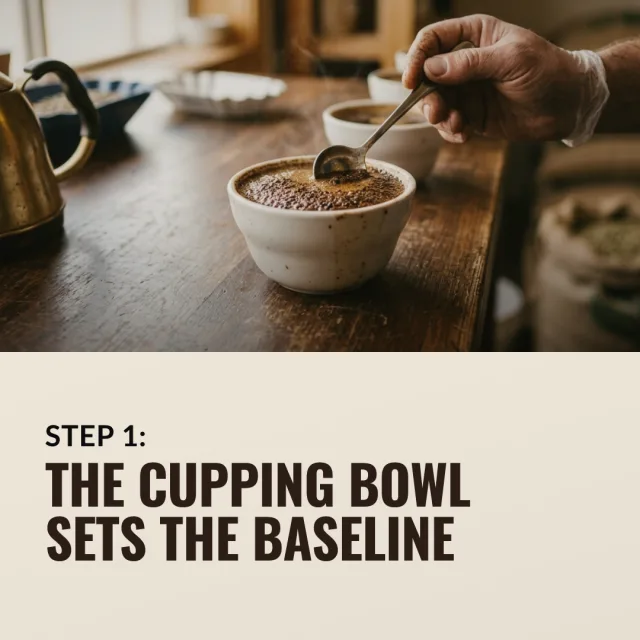
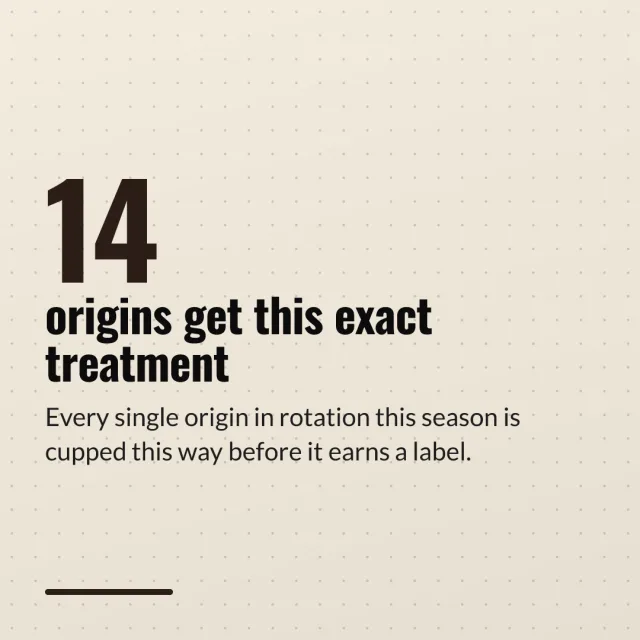
A carousel is planned as an arc: a hook that earns the swipe, a rehook that stands alone, body slides that each carry one idea, and a closing ask. The dealer picks one frame family for the whole deck, and variation comes from each slide's role, not from per-slide randomness. Randomness reads as a tell; the judge punishes it. The whole eight-slide deck is on the carousel world.
slide 1 · hookslide 3 · step 1slide 7 · proof
The stack
honest names, no mystery sauce
claude-opus-4-8decides the brief, angles, and copy; judges every render
claude-sonnet-4-6runs the fast text loop: scoring, rewriting, planning
satori + resvgcomposite the design deterministically, in the Worker
Cloudflare Workersone worker owns the API, MCP, renderer, and this site
The same engine also cuts short-form video: narrative beats, motion b-roll, captions timed to a real voiceover. It runs Taka's reels in production today and joins the public API when it clears the same bar the rest of this page describes. Watch one on the video world.
Now watch it work.
One call, a brief, and a brand kit. You get the masters, the caption, the judge's score, and the spec to revise it with.